
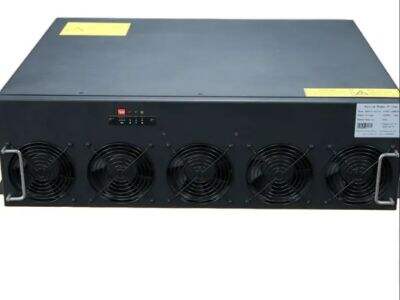
Power active filter and power factor in industrial manufacturing are two very critical things. Connecting the dots between one and the other can be how companies drive energy efficiency and operational-optimization gains. Zhifeng focuses on applying these principles to increase performance and lower costs.
Advantages Of Active Power Filters
APFs have numerous advantages in industrial applications. These filters can be used to improve system operation and reduce down-time by continually monitoring and correcting power quality problems. One of the main benefits to the application of active series active filter in electrical systems is that they mitigate harmonic distortion. Three-phase harmonics can cause systems to fail and consume higher energy. The harmonic distortion is suppressed by filtering out such harmonics so that power quality is improved and sensitive equipment is protected.
Use active power filters would be able to enhance the power factor. Power factor describes the efficiency at which electrical power is being consumed in a circuit. Low power factor can lead to costly energy bills and low efficiency. Active power filter harmonic can improve the power factor, by compensating reactive power and also for the best electrical energy flow. This can result in significant cost reduction and generally better system performance.
Enhancing Energy Efficiency through Power Factor Correction
Power factor correction is an important issue of power utilization in industrial environments. Through power factor correction, businesses can minimize wasted energy, decrease the cost of utilities and prolong the life of electric equipment. Power factor correction is a technique to adjust the ratio of real power (active power) to apparent power in an electrical system. This active power filter enables them to optimally utilise the energy they require and to reduce losses on the power grid.
The power factor correction can be done with capacitors or active power filters. Capacitors can hold an electric charge and discharge it as necessary, offsetting reactive power in a system. Active power filters on the other hand can actively control current to correct power factor's instantaneous value. Applying these methods, an enterprise can protect its electrical systems from becoming inefficient and expensive.
the relationship between power factor and active power filters must be clearly understood in order to improve energy saving and reduce operation costs of industrial manufacturing. Using the advantages of APFs, applying power factor correction methods, enterprises are able to optimize their electrical systems raising it on a new technological level. Zhifeng has been holding in this filed, and it can help company to reach the energy efficiency that relying on to improve market competitiveness.
The Impact Of Power Factor On Electrical Systems
Power factor: An important word in the world of electricity. It is also an indicator of how effectively electric power is being utilized in a system. A power factor of 1 indicates that all the incoming power is being used to its full potential, everything less than means some of it is wasted. Low PF causes many problematic conditions in electrical systems: High energy costs, Disconnects and overheating of motors, Overheating/heavy stressing of distribution transformers and reducing service life.
Voltage Drops are one of the major issues arising out of Low Power Factor. When the power factor is poor, more current must be supplied to provide the same amount of power to a load. The higher current demand can cause voltage to fall at some points in the system may not work as planned and may damage equipment. Furthermore, a low power factor can also lead to the production of reactive power, which is the power required in maintaining magnetic fields in systems, (like motors and transformers). This reactive power doesn’t accomplish anything and can also overload the electric grid.
Role of APFs in Harmonic Compensation
Harmonics are electrical abnormalities in voltage and current waveforms that can cause disruptions and damage to equipment functioning on the electrical system. They are produced by non-linear loads including computers, variable speed drives and LED lights. Harmonics may cause overheating of equipment, excessive energy loss, and also system contingencies. For harmonics, active power filters can be employed to cancel them.
Active power filters are electronic devices, which monitor the electrical system and inject corrective currents to eliminate harmonics. By doing so, AFPs contribute to a cleaner and more stable power supply, mitigating the threat of equipment failure and increasing the operational efficiency of an infrastructure. Active power filters are particularly useful in applications with a high density of nonlinear loads, where harmonics are most likely to be present.
Optimising cost savings with power factor correction
Power factor correction is the act of correcting a power factor in an electrical system to lower the overall energy usage in said electrical system, as well as increase the systems efficiency. Higher power factors mean lower amperage and less kw that’s shipped out from your Generator, the less amounts of kw drawn to ship out generates reduced energy charges on your bill. Power factor correction can be used to decrease voltage drops, increase equipment efficiency and promote longer life of the equipment.
Capacitors are widely used as power factor correction devices. Capacitors are devices for storage of electrical energy and subsequent release to inductive loads as needed to help the power factor of a system. Considerable cost savings and efficiency can be achieved when the power factor is optimized through strategic implementation of capacitors in the electrical system. A power factor correction is an easy and inexpensive way to increase the capacity of your electric system, save you money on a continuing basis.